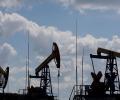
Two days after Russian President Vladimir Putin concluded his visit to India, during which he assured that Moscow would remain a reliable energy supplier, the Kremlin on Monday said that India, as a sovereign nation, is free to buy oil from sources it deems beneficial. It expressed confidence that New Delhi will continue to prioritise its economic interests.

Prime Minister Narendra Modi cautioned against the 'weaponisation' of technology and critical minerals at the BRICS summit, advocating for cooperation to foster shared prosperity. Concurrently, Chinese President Xi Jinping announced plans for an open-source AI ecosystem for BRICS nations, positioning Beijing as a key technology partner amid global AI competition.

Will rising tensions between US-Israel and Iran threaten crude oil supply through the Strait of Hormuz, putting India's fuel prices, imports, and economic stability at risk?

'Every year we import approximately $70 billion worth of gold -- closer to $72 billion in 2025-2026, an all-time record.' 'There is no parallel for this anywhere in the world. And this love for gold will not disappear overnight.'

India is set to reduce its direct imports of Russian crude from late November, following new US sanctions on Rosneft and Lukoil, effective November 21.

Not a single retail outlet ran dry. Every household that wanted a cylinder got one. India faced neither a 1991 moment nor a 2013 one. Macroeconomic stability held. This was not an accident, and it was not luck alone. It was the work of a government that chose to act as it had during the pandemic -- deliberately and gradually, building one measure upon another rather than reaching for a single dramatic lever, explains V Anantha Nageswaran, chief economic advisor to the Government of India.

United States Senator Lindsey Graham on Sunday claimed that Indian Ambassador to the US Vinay Mohan Kwatra spoke to him last month about India buying less Russian oil and asked him to tell President Donald Trump to relieve the 25 per cent tariff.

India possesses approximately 100 million barrels of commercial crude oil stocks, capable of covering 40-45 days of its requirements if flows through the Strait of Hormuz are disrupted, according to Kpler.

US President Donald Trump and Russian President Vladimir Putin discussed the Iran conflict and its impact on global energy supplies during a phone call.
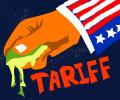
A trade deal makes sense only if it is fair and reciprocal. If the cost is strategic dependence or loss of policy space, waiting is the wiser option, asserts Ajay Srivastava.

India's total purchase of oil from Russia in a month is probably less than what Europe does in an afternoon, External Affairs Minister S Jaishankar said.

US President Donald Trump claims India has significantly reduced and nearly stopped purchasing oil from Russia, citing de-escalation efforts. This follows previous tensions over tariffs and India's energy sourcing.

United States President Donald Trump on Tuesday boasted about India-US defence cooperation, claiming that India's order for 68 Apache attack helicopters was delayed by five years and that Prime Minister Narendra Modi personally raised concerns over the long delivery period during a meeting with him.

United States President Donald Trump has said Prime Minister Narendra Modi 'knew he was not happy' with India's purchases of Russian oil and that Washington, DC can raise tariffs on New Delhi 'very quickly'.

'What we are willing to do is definitely going to depend on what the Indian government wants to do.'

'India is cosying up to Xi Jinping. They don't need the Russian oil. It's a refining profiteering scheme.'
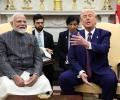
Trump, delivering remarks at the House GOP Member Retreat, also claimed that "Prime Minister Modi came to see me, 'Sir, may I see you please'. Yes."

In the wake of the FTA between India and the European Union, the United States has described the Europeans as 'very disappointing', saying they were unwilling to join Washington, DC in putting tariffs on New Delhi for its purchases of Russian oil because of this trade deal.

The US said India will lower tariffs on a "vast array" of American industrial and agricultural goods, such as "fruits, vegetables", to zero per cent under the trade deal announced by President Donald Trump.

India offset the decline in exports to traditional destinations by sharply ramping up shipments to Jordan (18,086 per cent), Hong Kong (17,006 per cent), Spain (13,436 per cent), the Philippines (2,235 per cent), and Namibia (1,068 per cent) in H1FY26.

The White House trade adviser, Peter Navarro, on Sunday (local time) again added to his previous meltdown, after being corrected over spreading misinformation pertaining to India's purchase of Russian oil, by dismissing the community notes on X and accusing it of serving 'foreign interests' that meddle in domestic US economics and politics.

A US official has stated that India's continued purchase of Russian oil is a point of contention in the relationship between the two countries, as it helps fund Russia's war efforts in Ukraine.
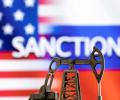
Russia has a "special mechanism" to confront any challenge arising out of the US slapping punitive measures against India for its procurement of Russian crude oil, Russian charge d'affaires Roman Babushkin said on Wednesday.

A senior Russian diplomat has called the US pressure on India for its procurement of Russian crude oil "unjustified," expressing confidence in continued energy cooperation between India and Russia despite external pressures.

"We do not think India should accelerate or increase imports of Russian energy and other commodities even as, obviously, those decisions are made by individual countries," White House Press Secretary Jen Psaki told reporters at her daily news conference.

Calling the community note on X "crap", Navarro alleged that Elon Musk is allowing "propaganda" and reiterated his accusations of India purchasing Russian oil only to make profits.

US President Donald Trump asserted that the trade deal with India remains intact despite a Supreme Court ruling against his tariffs, while also claiming he used tariffs to stop a war between India and Pakistan.

A 500 per cent tariff would effectively shut out India's goods and services exports to the US.
His assertion came after Trump claimed that his "friend" PM Modi has assured him that India would stop purchasing oil from Russia, a move he described as a big step toward increasing pressure on Moscow over its invasion of Ukraine.

Indian refiners are likely to import 2-2.2 million barrels per day of Russian crude oil in June - the highest in the last two years and more than the total volumes bought from Iraq, Saudi Arabia, the UAE and Kuwait, preliminary data by global trade analytics firm Kpler showed.
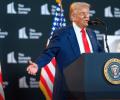
Former White House official John Bolton suggests that tariffs imposed on India by the US for purchasing Russian oil may have unintended consequences, potentially driving New Delhi closer to Beijing and Moscow.

'India should understand that we are not going to make the same mistakes with India that we made with China 20 years ago.'
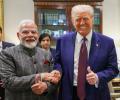
The agreement addresses non-tariff barriers and promotes increased trade in technology products and cooperation between the two countries.

On the table are additional batches of S-400 surface-to-air missile systems from Russia, which India used with immense success during Operation Sindoor. India could buy at least two squadrons of Su-57 fighter jets plus joint production of S-500 air defence systems.
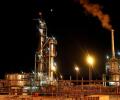
India's import of discounted crude oil from the Russian Federation hit an all-time high in May, with state-run refiner IOC becoming the biggest importer of Russian oil, relegating Reliance Industries to the second place, trade and shipping data show. Indian imports of Russian oil, accounting for over 46 per cent of its total crude oil imports in May, have grown after strong backing by New Delhi, with state-run refiners powering imports of discounted crude. Discounts on Russian oil average around $10 a barrel, said an official from a state-run refiner. IOC's May purchases rose by 64 per cent on the month, and accounted for half of its total crude imports last month, ship tracking data show.
India and the US have reported positive progress in recent trade talks in Washington, agreeing to maintain engagement to finalise a bilateral trade agreement, which now requires recalibration following new US tariffs.

India's unabated tryst with Russian crude oil is slowly coming to an end. The time has come for Indian refiners to navigate, creatively, the choppy waters of the post-honeymoon period, and for Indian policymakers to take cognisance of the broader impact on India from the spillover of the Russian crisis - after Washington's warning to transgressors last week. Shipments from Russia to India have averaged over 1.8 million barrels a day since February, according to data from Paris-based market analytics firm Kpler. But much of the crude shipped to India was non-sanctioned because it traded below a price cap set by the US led G-7 nations in December.
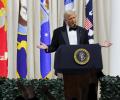
'The US is strongly placed to expand its crude supplies to India.'
'Trump does have a master plan in mind to put pressure on India with the additional tariff of 25 per cent to get Modi to persuade Russian President Vladimir Putin to freeze the Ukraine war.' 'It has not worked so far. By end-September only we'll know for sure the future trajectory of India's oil purchases from Russia,' observes Ambassador M K Bhadrakumar.

'We are now awaiting a response from the US; they have to get back to us.'
